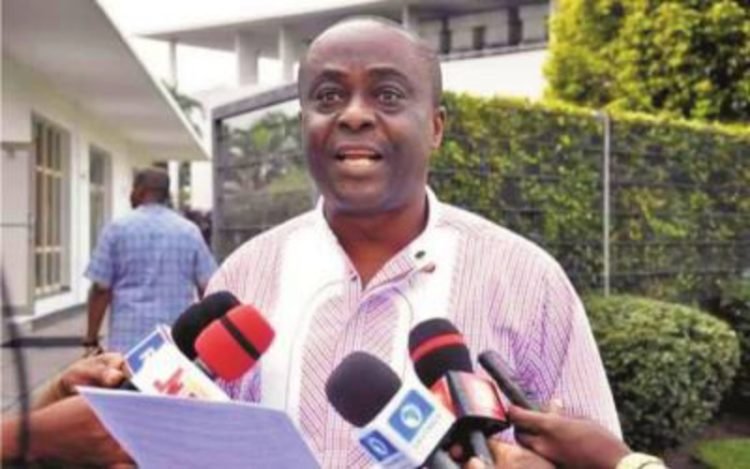


Former Senate President, Bukola Saraki, has strongly criticised Kwara State Governor, Abdulrahman Abdulrazaq, over renewed allegations linking him to the 2018 Offa robbery incident, describing the move as “frivolous” and politically motivated.
In a statement issued on Saturday, Saraki denied any involvement in the robbery, insisting that previous investigations had already cleared him of wrongdoing.
He explained that the case was earlier investigated under the administration of former President Muhammadu Buhari, noting that legal advice from the Director of Public Prosecution (DPP) found no evidence linking him to the crime.
According to Saraki, two separate legal opinions issued in June and August 2018 concluded that there was no prima facie case against him for offences including armed robbery, conspiracy, and culpable homicide.
The former Senate President accused the governor of deliberately reviving the allegations as a political tool following his recent criticism of insecurity in Kwara State during an interview on Channels Television.
He alleged that the state government ignored key legal documents that exonerated him while promoting what he described as “skewed narratives” in the media.
Saraki further described the action as an abuse of court process aimed at tarnishing his reputation, adding that his legal team is prepared to challenge the case in court.
He also criticised Abdulrazaq’s handling of security in the state, claiming that over 400 lives have been lost to banditry between January 2025 and March 2026, with more than 100 kidnappings recorded.
The former governor argued that the focus on legal action against political opponents reflects misplaced priorities, accusing the governor of prioritising “dirty politics over governance.”
Saraki expressed confidence in the judiciary, stating that the courts would ultimately determine the matter based on evidence.
The Offa robbery case, which occurred in April 2018, led to the arrest and conviction of several suspects, with the matter currently pending before the Supreme Court.