

RIVERS STATE 2026 BUDGET STATEMENT:
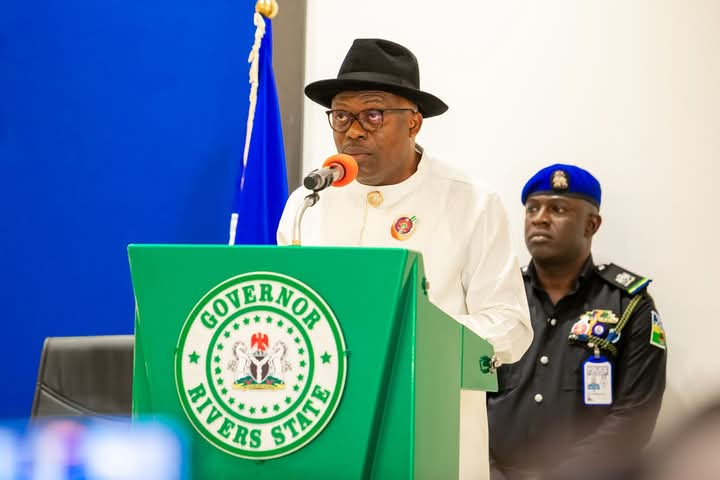
PRESENTED TO THE RIVERS STATE HOUSE OF ASSEMBLY
BY
HIS EXCELLENCY SIR SIMINALAYI FUBARA GSSRS,
GOVERNOR, RIVERS STATE
(JULY 10, 2026).
Protocols
Mr Speaker, it is my pleasure to present the 2026 Rivers State Appropriation Bill to the Honourable members of the Rivers State House of Assembly for your consideration and passage into law.
2.As we all know, despite the challenges, the machinery of governance has continued to function in our dear State, and we have made significant progress in our priority areas of road infrastructure, human capital development, as well as in the security of lives and property.
3.Most significantly, our State has remained fiscally stable, thanks to our commitment to fiscal responsibility, prudence, and accountability in managing public funds.
4.We do not tolerate mismanagement at any level and have wisely utilised public funds to provide services, attract investment, create jobs, and offer socio-economic opportunities for our people.
- Honourable Speaker, with these introductory remarks, I proceed to present the highlights of our 2026 Draft Budget.
THE 2026 BUDGET
6.The 2026 budget, titled “Budget of Resilience for Growth and Development”, is the result of considerable public participation in a shared vision for building an economically resilient, thriving, and prosperous Rivers State.
TOTAL REVENUE PROJECTION
7.The total projected revenue for Rivers State for the 2026 Fiscal Year is One Trillion, Eight Hundred and Fifty-four Billion, Two Hundred and Forty-eight Million, Seven Hundred and Thirty-four Thousand, Four Hundred and Seventy-five Naira, Seventy-six Kobo (N1,854,248,734,475.76) only.
8.This means our proposed total operating revenue for 2026 is projected to increase by 24.49 per cent over the 2025 adjusted budget projections, due to possible increases in returns from FAAC, Derivation funds, and internally generated revenue, as the national economic outlook continues to show positive growth.
9.The details of the 2026 budget assumptions and fiscal objectives are outlined in the Medium-Term Expenditure Framework 2026-2028, which the House has already considered.
THE REVENUE SOURCES: BUDGET FUNDING
- The revenue sources are as follows:
S/N
Source
Projected revenue
N
1
Internally Generated Revenue
487,609,336,496.97
2
Total for FAAC Allocation, including derivation funds, value-added tax, and exchange gain
936,052,408,964,24
3
Opening and Closing balances
48,105,601,105.95
4
Total Capital receipts, including domestic loans, grants, and asset sales
382,481,387,908.60
TOTAL
N1,854,248,734,475.76
RECURRENT EXPENDITURE
11.Mr Speaker, a total of Four Hundred and Thirteen Billion, One Hundred and Nine Million, Three Hundred and Ninety-six Thousand, Seven Hundred and Five Naira, Seventy Kobo (N413,109, 396,705.70) only is allocated to Recurrent Expenditure, with the breakdown set out below:
S/N
Expenditure Item
Projected Expenditure
(N)
1
Total personnel costs, including salaries for Ministries/Departments/Parastatals
154,769,493,719.37
2
New Recruitments
15,215,554,262.78
3
Consolidated revenue fund charges
772,951,860.02
4
Overheads for MDA’s
36,711,243,615.75
5
Grant contributions and subsidies
9,758,400,000.00
6
Gratuities
20,000,000,000.00
7
Death Benefits
7,000,000,000.00
8
Monthly Pensions
55,097,787,852.00
9
Employee Compensation Act
4,000,000,000.00
10
Legacy Pension Gratuities
20,000,000,000.00
11
Group Life Insurance
5,000,000,000.00
12
Interest on domestic loans
28,234,908,958.47
13
Interest on foreign loans
6,498,542,100.86
14
Short-term Domestic loan Principal repayment
3,863,595,563.65
15
Long-term domestic loan principal repayment
30,450,000,000.00
16
Foreign loans principal repayment
15,726,918,772.82
17
TOTAL
413,109, 396,705.70
12.Mr Speaker may wish to note that we have proposed at least a 50 per cent increase in overhead expenditure, to be enacted immediately once the budget becomes law, to enable MDAs to cover their operational costs.
13.We have also made sufficient arrangements to clear the backlog of gratuities and death benefits owed to retired civil servants, which had accumulated under previous administrations.
CAPITAL EXPENDITURE
14.The sum of One Trillion, Four Hundred and Five Billion, Two Hundred and Seventy Million, Eight Hundred and Seventeen Thousand, Eight Hundred and Sixty-Nine Naira, thirty-six kobo (N1,405,270,817,869.36) only is allocated to capital expenditure, with the sectoral breakdown outlined below.
S/N
Sectors
Project Expenditure
1
Administration
278,750,190,631.86
2
Economic
625,850,791,044.51
3
Law and Justice
65,259,212,519.21
4
Social
435,410,623,673.78
5
TOTAL
1,405,270,817,869.36
Highlights of Capital Budget
15.The capital budget has increased from N713,777,298,623.03 in 2025 to N1,405,270,869.36 in 2026 – a 22.49% rise in infrastructure services expenditure.
16.Major capital expenditure is planned in the following areas.
S/N
Project
Amount Allocated
1
Works and Infrastructure
533, 321,002,523,22
2
Educational Development
315, 000,000,000.01
3
Healthcare Delivery
105, 429,927,122.82
4
Rivers State House of Assembly
41, 439,535,629.10
5
Rivers State Judiciary
30, 000,000,000.00
6
Agriculture
19, 258,772,080.79
7
Power
15, 000,000,000.00
8
Chieftaincy and Community Development
8, 501,000,000.00
9
Sports
7, 975,000,000.00
10
Youths
7, 000,000,000.00
11
Women Affairs
6, 503,645,900.51
12
Environment and sustainable development
6, 605,571,177.59
17.Hon. Speaker, in addition to aligning with our fiscal realities, the 2026 budget prioritises the core objectives of building a secure, prosperous, and resilient State characterised by inclusive economic growth, sustainable development, and improved standards of living for all.
18.Consequently, our primary priorities for the 2026 financial year include economic growth, human capital development, socio-economic infrastructure, and social investments.
19.Mr Speaker, we present to this Honourable House a budget that reflects the needs and aspirations of our people – a budget that will deliver for all residents of Rivers State.
21.At the core of this budget is our commitment to infrastructure development – including new investments, the completion of ongoing road projects, and the maintenance of existing roads and bridges.
20.We have also allocated an exceptionally large budget to education, aiming to reshape the future of our State’s education systems to achieve better outcomes.
21.Mr Speaker, the 2026 budget is not just about allocating funds to specific socio-economic sectors. Instead, it is a people-centred budget that acts as a blueprint for progress and service delivery, outlining a vision for a better future. It will bring tangible benefits to every ward, local government area, and resident.
22.As a government, we remain committed to getting the essentials right and building a state where all residents, regardless of background, receive the services they deserve.
23.We will ensure every kobo is spent wisely to deliver services, attract investment, create jobs, and provide opportunities for our people to flourish.
24.Speaker, the collective interests of our State and people are more important than any other consideration.
25.Therefore, as we present this budget today, we must recognise our shared responsibility to act deliberately to accelerate development and recover as much lost ground as possible.
26.As leaders, it is our collective duty to ensure every kobo is spent where it is most needed and to deliver on our mandates to the people!
27.Let us therefore join hands, united in purpose, to ensure Rivers State continues to stand out as a bastion of good governance and accountability.
28.In conclusion, although we acknowledge the delay in preparing the budget, we assure a strong implementation, consistent with our commitment to accountability, transparency, and responsible management of public resources.
29.I urge all honourable members, regardless of political affiliation, to support and approve this budget.
30.I hereby table the Rivers State Budget for the 2026 financial year for consideration and enactment into law.
Thank you.