

The Independent National Electoral Commission (INEC) in Rivers State has stepped up efforts to promote inclusive voting by sensitizing Persons With Disabilities (PWDs), Electoral Officers and Disability Desk Officers on electoral procedures ahead of the 2027 general elections.
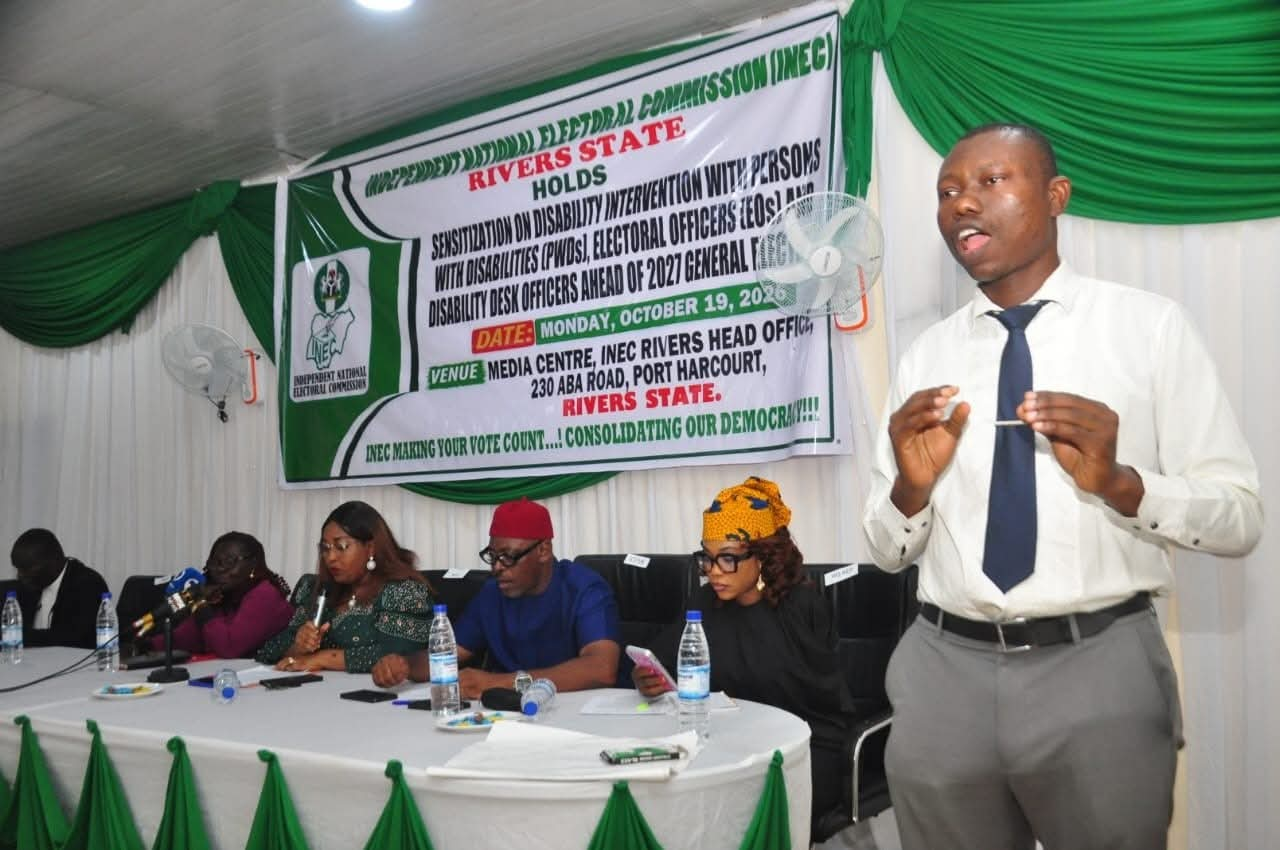
The sensitization programme, themed “Sensitization on Disability Intervention With Persons With Disabilities, Electoral Officers and Disability Desk Officers Ahead of 2027 General Elections,” was held at the commission’s state office in Port Harcourt.
Representing the Resident Electoral Commissioner, Dr Johnson Alalibo Sinikiem, the Administrative Secretary, Dr Angela Ebhodaghe, reaffirmed INEC’s commitment to ensuring that disability does not prevent eligible citizens from exercising their voting rights.
“Today’s gathering is not merely a routine administrative meeting; it is a profound testament to the Independent National Electoral Commission’s unwavering commitment to building an electoral system where inclusion, transparency, and equity are non-negotiable standards. Every eligible citizen, regardless of physical ability, must be empowered to exercise their constitutional right to vote,” she said.
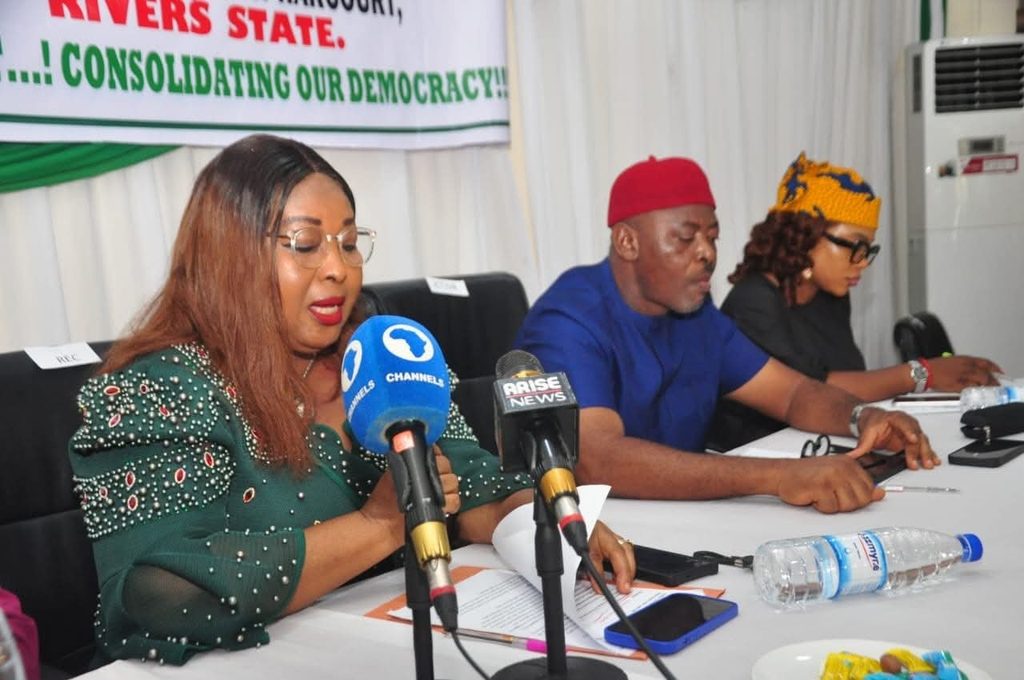
Dr Angela Ebhodaghe, Administrative Secretary of INEC
Ebhodaghe explained that INEC was targeting zero exclusion at polling units across Rivers State in the 2027 elections through improved accessibility, the provision of assistive devices and the training of electoral personnel.
She listed ballot guides, magnifying glasses, visual instruction posters and priority voting arrangements among the measures introduced to facilitate voting for persons with disabilities.
The administrative secretary also disclosed that Permanent Voter Cards (PVCs) belonging to those who registered between August and December 2025 were ready for collection. She added that uncollected cards from previous registration exercises conducted between 2011 and 2025 were also available.
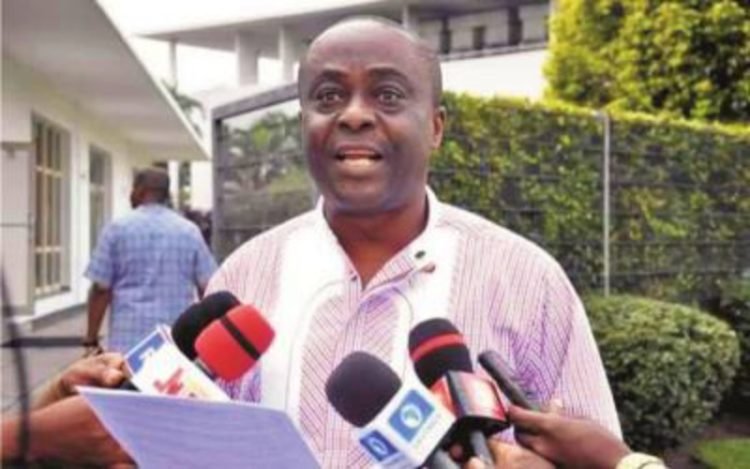
The Head of Voter Education and Publicity at INEC in Rivers State, Robinson David, said the commission was committed to ensuring that eligible persons with disabilities were not denied the opportunity to participate in elections because of their conditions.
David also took participants through essential electoral procedures, including voting, sorting, counting and the collation of results.
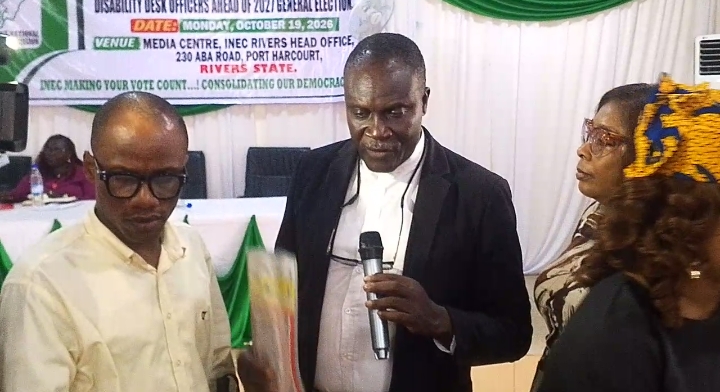
Robinson David, Head of Voter Education and Publicity at INEC in Rivers State
In a presentation, Julie Osezua, who represented INEC’s Gender and Inclusivity Department at the commission’s headquarters in Abuja, said the programme was aimed at deepening stakeholders’ understanding of disability inclusion, accessibility and measures to safeguard the electoral rights of PWDs.
She stressed that the involvement of persons with disabilities as voters, candidates and election officials was critical to building an inclusive and participatory democracy.
Osezua noted that INEC was working to eliminate barriers that could hinder their participation in elections, including physical, communication, information and procedural challenges.
Julie Osezua, representing INEC’s Gender and Inclusivity Department
Meanwhile, the Chairman of the Joint Association of Persons With Disabilities in Rivers State, Collins Atipona, represented by the association’s Public Relations Officer, Brown Benjamin, commended the commission for its efforts to promote disability inclusion in the electoral process.
Benjamin said the initiative had strengthened the confidence of persons with disabilities in their participation in governance and electoral activities.
“This inclusive process has made us believe that we are included in governance and electoral processes,” he said.
He urged stakeholders to recognise the capabilities of persons with disabilities and ensure their involvement in electoral activities, including opportunities to serve as ad hoc election personnel.
Other participants, including Amuda Thedus, a cluster head and Chairman of the Nigerian Association of the Blind, and Cornelius Ala, who represented persons with spinal cord injuries, called for comprehensive inclusion to guarantee that no eligible voter was left behind.
The programme attracted persons with disabilities, electoral officers, representatives of the National Orientation Agency and other stakeholders.
A major highlight was a practical demonstration of voting procedures for visually impaired persons. INEC also pledged to train disability cluster heads to educate and mobilise members of their respective communities on voting procedures and other electoral requirements.