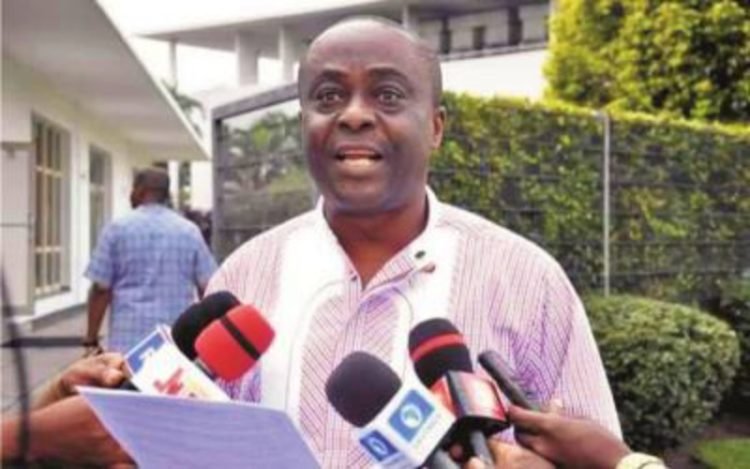


Mixed reactions have trailed the decision of media personality Segun Owolabi to anchor the All Progressives Congress (APC) presidential campaign rally held in Port Harcourt, Rivers State, on Saturday.
Owolabi, a renowned journalist and broadcaster, anchored the rally, which attracted President Bola Tinubu, Vice President Kashim Shettima, Senate President Godswill Akpabio, governors and other dignitaries.
His role at the political event has sparked debate among media practitioners and members of the public, with some questioning the neutrality of a journalist who anchors political campaigns, while others have defended his participation, describing it as a professional engagement.
Reacting to the development, media personality Olalekan Da O-square criticised Owolabi and some of his colleagues while responding to comments by legal practitioner Chetam Nwala, who had earlier questioned the journalist’s involvement in the rally.
Da O-square described Owolabi and others as “local champions”, accusing them of contributing to the decline of the media industry in Rivers State.
He also questioned Owolabi’s neutrality, alleging that he had never been politically neutral and describing him and some other media personalities as supporters of the Minister of the Federal Capital Territory, Nyesom Wike, and his political associates.
However, the criticism has attracted opposing views from other media personalities and members of the public.
Fortune Obi defended Owolabi, describing him as an opinion journalist and arguing that there was nothing wrong with him anchoring a presidential rally.
Similarly, Jonathan Moses dismissed the criticism, arguing that journalists and media personalities should be allowed to undertake paid engagements, regardless of the political party involved.
He also questioned why similar concerns were not raised when Owolabi reportedly anchored an event organised by the New Democratic Congress (NDC) presidential candidate, Peter Obi.
In a similar reaction, Dahbinjoe Binapp noted that Owolabi had also anchored an NDC town hall meeting in Rivers State, arguing that other political parties, including the African Democratic Congress (ADC) and Allied Peoples Movement (APM), could equally engage him for their events.
Meanwhile, Felix Needam supported the criticism, arguing that it was inappropriate for Owolabi to handle political events given his position and public standing.
Another media personality, Ndume Green, defended the anchor arguing that the criticism was selective, noting that Owolabi had anchored an event organised by Peter Obi’s camp weeks earlier without attracting similar controversy.
Citing examples from the United States, he referenced veteran journalist Walter Cronkite, who anchored coverage of Democratic and Republican National Conventions for several years, as well as CNN journalists Anderson Cooper and Jake Tapper, who have moderated political debates and party events.
He further argued that complete media objectivity was difficult to achieve, particularly in an environment where governments remain major advertisers and patrons of media organisations.
Green maintained that media practitioners should be allowed to take up paid political engagements, adding that such services come with financial responsibilities.
The differing opinions have continued to fuel debate over the boundaries between journalism, political participation and paid media engagements, particularly regarding the responsibility of journalists to maintain public confidence in their neutrality.