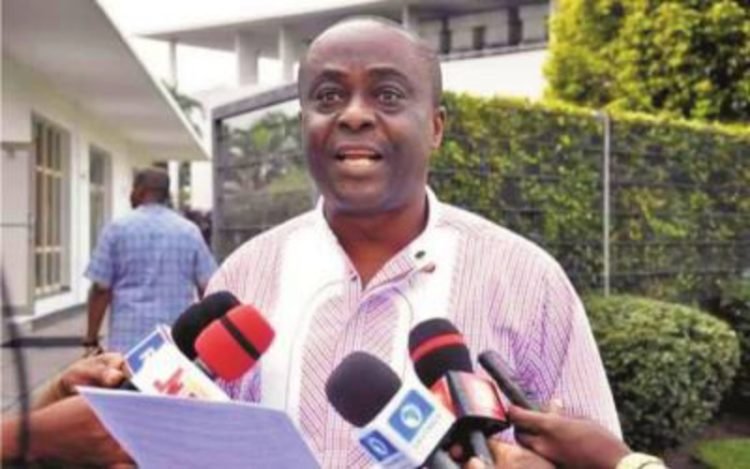


Governorship candidate of the New Nigeria Democratic Congress (NDC) in Rivers State, Dumo Lulu-Briggs, has said he is contesting the 2027 governorship election to return political power to public service and reposition the state for sustainable development.
Lulu-Briggs, in a statement titled “Why I Am Running,” said Rivers had been held back by prolonged political conflicts that had diverted attention from critical issues including job creation, education, healthcare, infrastructure, security and economic growth.
He said his “Reset Rivers State” agenda would focus on peaceful and purposeful politics, stronger institutions, economic diversification, equal access to opportunities, restoration of public trust and improved environmental protection.
According to him, Rivers has the human resources and economic assets needed to prosper, including its oil and gas industry, ports and waterways, agriculture, tourism, blue economy, creative sector and the commercial strength of Port Harcourt. He said the priority should be converting these assets into jobs, stronger businesses, reliable infrastructure and improved living standards.
The NDC candidate also unveiled an ambitious long-term economic vision, saying his administration would lay the foundation for growing the state’s economy from an estimated US$20 billion to US$200 billion within 15 years.
He promised greater discipline in the management of public funds, improved power and logistics, serviced industrial land, employer-linked skills development, stronger agriculture and fisheries, tourism development and enhanced environmental monitoring and emergency response.
Lulu-Briggs said he was not asking Rivers residents for a “blank cheque,” but for the opportunity to serve and be judged by measurable results.
“I am not asking you merely to support Dumo Lulu-Briggs. I am asking you to join us to return political power to service,” he said, urging residents to choose what he described as “purpose over capture, work over noise, competence over permanent conflict and prosperity over poverty.”