

President Bola Tinubu has ruled out a return to the petrol subsidy regime, saying Nigeria must accelerate the development of cheaper energy alternatives to reduce the impact of global energy price fluctuations on transportation costs.
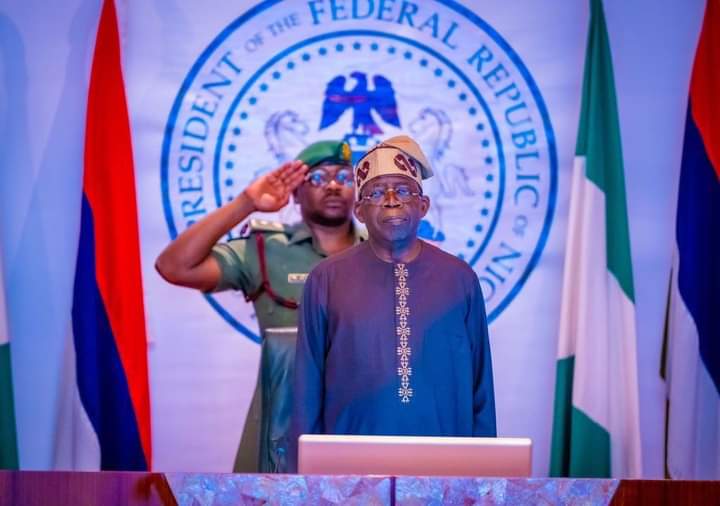
Tinubu stated this in a State House press statement on Saturday, September 19, while providing an update on the National Affordable CNG Transit Programme.
He said disruptions to global energy supplies were putting pressure on petrol and diesel prices and increasing transportation costs worldwide.
According to the President, Nigeria cannot control developments in global energy markets but can reduce its exposure by taking advantage of its abundant natural gas resources.
“At a time like this, our answer cannot be to return to the ruinous petrol subsidy regime that consumed trillions of naira and left our economy exposed to every movement in international oil prices, as some have suggested,” he said.
Tinubu maintained that the government must instead accelerate the development of alternative energy sources and expand their use in the transportation sector.
He said his administration had invested in building a CNG transportation ecosystem across the country over the past three years.
The President disclosed that more than 120,000 vehicles had been converted to run on CNG, while the country had over 400 certified conversion centres and more than 90 CNG refuelling stations.
He said the figures were increasing daily, adding that the Federal Government would continue to support the expansion of CNG infrastructure and access.
Tinubu also highlighted the impact of alternative-energy transport initiatives in several states, including reductions in fares on some routes in Borno, Kaduna, Oyo, Adamawa, Enugu, Plateau and Niger.
He said the National Affordable CNG Transit Programme was expected to deliver measurable reductions in transportation costs from October 1.
The President urged state governments to work with transport unions and commercial operators to support vehicle conversions, deploy more buses and facilitate the infrastructure needed to expand the programme.
He stressed that the savings from cheaper energy must reach commuters through reduced fares.
“Nigeria has the gas. We are building the infrastructure. We are already seeing the savings. Now we must move faster and scale this so more Nigerians feel those savings in the fares they pay every day,” the president added.