


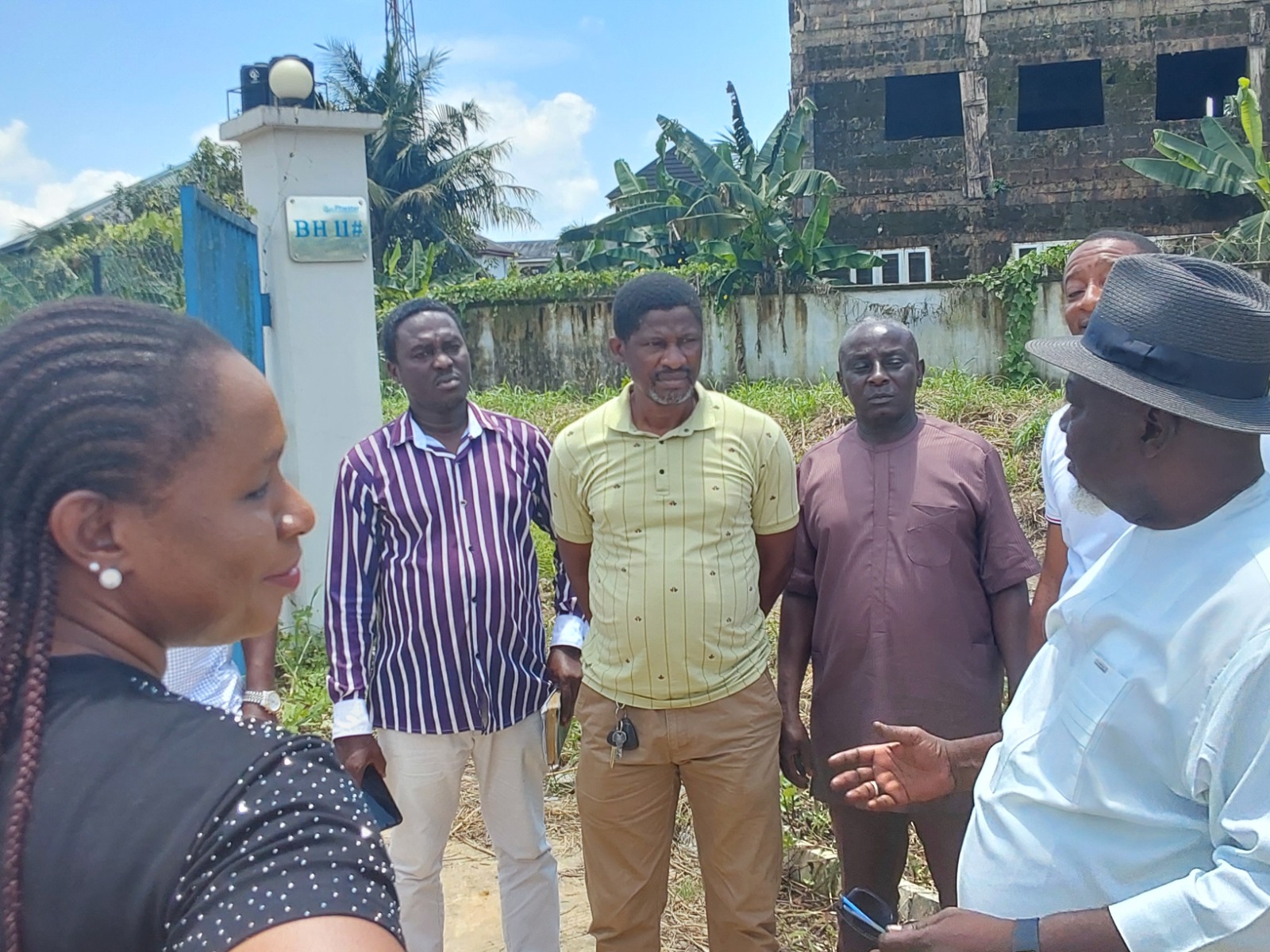
The Rivers State Ministry of Water Resources and Rural Development has exonerated the Port Harcourt Water Corporation (PHWC) from allegations that it blocked drainage channels, resulting in flooding in its host communities attributing the obstruction instead to indiscriminate refuse dumping and the conversion of wetlands into residential areas.
The ministry’s Permanent Secretary, Gonee Gordon Nwizug, stated this during an inspection of the affected areas with PHWC officials, led by Managing Director Ibibia Walter, following Governor Siminalayi Fubara’s directive over a complaint alleging that the corporation had blocked drainage channels.
Nwizug said the inspection showed that human activities were responsible for the obstruction of the water channels and that debris dumped into canals had prevented the free flow of water.
“Human beings have decided to throw debris into the canal, blocking the water passage. This is unacceptable,” he said.
He added that wetlands had also been converted into residential areas, warning that such practices could worsen flooding in the area.
Nwizug said the team would submit its findings to the governor for immediate mitigation, while residents would be sensitized on the need to preserve wetlands and desist from dumping refuse in canals and waterways.
Also speaking, Engineer Charlotte Iwokiri Aningenime Production and Water Quality Manager, PHWC, said the corporation was already implementing a storm-water drainage rehabilitation project to address flooding within its premises.
She said the project involves the construction of additional culverts, expansion of existing culverts and opening of water canals to properly channel floodwater from surrounding communities.
“The project is about 40 per cent complete, and by the end of December, we are really sure that it will be completed and it will take care of the flood water coming from outside into this premises,” Aningenime aid.
She explained that floodwater from the surrounding communities enters the PHWC premises, adding that the ongoing drainage project was designed to address the problem.
On water quality, Aningenime said the treatment process had provisions to deal with contaminants.
She further disclosed that water treatment had commenced, with water from the corporation’s 22 boreholes being treated and pumped to booster stations ahead of distribution to residents of Port Harcourt and Obio-Akpor Local Government Areas.
Earlier, the team inspected the Lower Bank section of the utility, where blocked drainage channels and encroachment on PHWC’s land were identified as potential threats to the plant and its immediate environment, with a view to addressing the situation and preventing future flooding.
The development comes amid renewed flooding in parts of Port Harcourt and its environs, with some communities submerged and residents calling for government intervention.
As you may know, the PHWC has completed the construction phase of its 148-million-litre-per-day water supply infrastructure, designed to serve about 1.3 million residents across Port Harcourt and Obio-Akpor Local Government Areas.
The project also includes approximately 456 kilometres of primary transmission and secondary distribution pipelines.