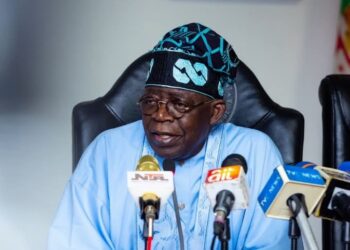


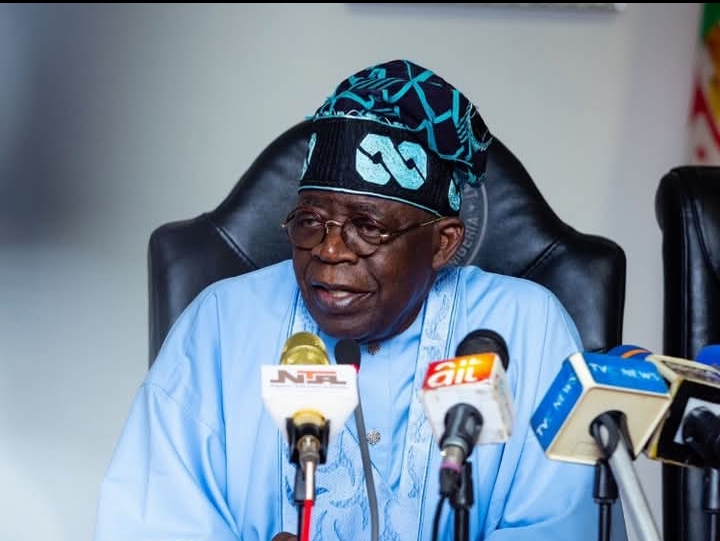
President Bola Ahmed Tinubu has explained the circumstances that led to his meeting with victims of the Plateau attacks at the airport in Jos, citing logistical constraints, security considerations, and prior diplomatic commitments.
According to a State House press release issued by his Special Adviser on Information and Strategy, Bayo Onanuga, the President’s schedule on Thursday initially included receiving the Chadian leader, Mahamat Idriss Déby Itno, and a planned trip to Iperu in Ogun State.
However, following a security briefing from Plateau State Governor, Caleb Mutfwang, Tinubu suspended his Ogun trip and made urgent arrangements to visit Jos. Despite this, he could not reschedule the meeting with the Chadian President, which focused on strengthening bilateral security cooperation and extended longer than expected, delaying his departure.
Upon arrival in Jos, further logistical challenges emerged. The approximately 40-minute journey from the airport to the city centre, combined with the absence of navigational aids for night landings, made it impractical for the President to travel into town and return before dusk.
As a result, authorities arranged for representatives of affected communities to meet the President at a hall near the airport. Present at the meeting were key security officials, including the Minister of Defence, the Chief of Army Staff, and the Inspector General of Police, who had earlier visited Rukuba, the epicentre of the violence.
The President had also deployed a high-level delegation ahead of his visit, including his Senior Special Assistant on Community Engagement, to assess the situation and engage local stakeholders.
During the meeting, Tinubu expressed condolences to victims, listened to their concerns, and engaged community leaders on finding lasting solutions to the decades-long conflict in Plateau State. He assured them of the Federal Government’s commitment to justice and peace.
As part of efforts to enhance security, the President announced plans to deploy 5,000 AI-enabled surveillance cameras across Jos to improve monitoring and aid in identifying perpetrators of violence.
He also invited community leaders to Abuja for further dialogue aimed at ending the recurring crisis.
The Presidency described the visit as a strategic engagement rather than a symbolic gesture, emphasizing the administration’s commitment to inclusive peacebuilding.
The meeting, which was broadcast live, was described as solemn and reassuring, with officials noting that it helped boost public confidence despite criticism from some quarters.