

The Peoples Democratic Party (PDP) has expressed concern over the implications of the Supreme Court’s comments following its ruling on the declaration of a state of emergency in Rivers State, warning that the interpretation could pose serious risks to Nigeria’s democratic framework.
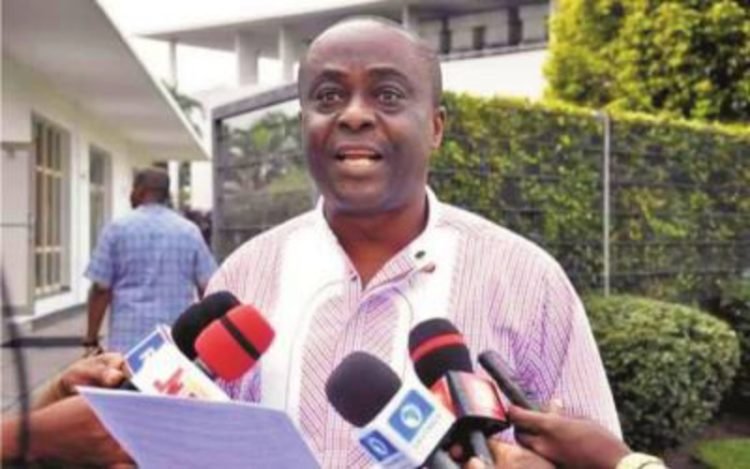
In a statement signed by its National Publicity Secretary, Comrade Ini Ememobong, the opposition party reacted to a split decision of the Supreme Court (six to one) in suit number SC/CV/329/2025, filed by the Attorney-General of Adamawa State and others against the Attorney-General of the Federation and the National Assembly.
The suit challenged the powers of the President to suspend democratically elected officials, including a governor and deputy governor, as well as democratic institutions such as a state House of Assembly, during a declared state of emergency. Although the apex court struck out the suit for lack of a cause of action, it went on to make comments on the substantive issues raised.
According to the PDP, those comments have been widely interpreted as endorsing President Bola Tinubu’s earlier declaration of a state of emergency in Rivers State.
While affirming its respect for the authority and finality of the Supreme Court, the PDP said it was “deeply concerned” about the broader political consequences of the reasoning attributed to the judgment.
The party argued that the Constitution clearly stipulates that only a State House of Assembly or a court of law can remove a governor from office, even temporarily, during a constitutional term. It warned that any contrary interpretation could open the door for a president, with the backing of the National Assembly, to use emergency powers to compel political compliance or alignment.
“The danger,” the party said, “is that state governments could be rendered completely subservient to the Federal Government, thereby undermining the federal structure and reversing hard-won democratic gains.”
The PDP further cautioned that a broad reading of Section 305(3)(c) of the Constitution, which allows for “extraordinary measures to restore peace and security,” could in future be stretched to justify the suspension of other constitutional institutions, including the judiciary.
Describing such a scenario as incompatible with federalism, the party questioned how an elected president in a federation could be empowered to dismantle democratic structures in a federating unit, remove elected officials, and appoint replacements without promoting authoritarianism.
The PDP called on the National Assembly to urgently initiate constitutional and legislative safeguards to clearly define and limit the scope of presidential emergency powers, in order to prevent abuse and protect Nigeria’s federal system.
It also urged Nigerians, civil society organisations, the media, and the international democratic community to remain vigilant in defending constitutionalism, federalism, and the sanctity of the electoral mandate.
The party expressed hope that the Supreme Court would, at the next opportunity, provide clearer guidance on the constitutional boundaries of emergency powers “in the overriding interest of justice, democracy, and the long-term stability of the Republic.”